Season 2, Episode 6
The Master Mason Who Lives What Others Write Books About
·2:18:41 min
A conversation with master mason Smári Sigurðsson about craftsmanship, responsibility, and life before the digital age. How Deep Work and Stoic philosophy are learned not from books, but by watching a master work and handing him the right tools at the right time.
 AI
AIClick to enlarge
Guests
S
Smári Sigurðsson
Master Mason
Show Notes
We live in times where we desperately search for guidance on how to live a good life in a hyper-connected world. We read books by scholars like Cal Newport about the importance of 'Deep Work' – the ability to immerse ourselves in demanding tasks without distraction. We listen to podcasts about Stoic philosophy to learn how to face adversity with calm and deliberation. We try to find shortcuts and 'hack' life to achieve balance.
But sometimes we don't need a new self-help book. Sometimes the answers sit at the kitchen table right across from us, in the form of a person who has simply lived by these principles their entire life, without ever having heard the names for them.
In the final episode of the year, I sat down with my father, Smári Sigurðsson, a master mason.
Dad is a man who has lived most of his life without the Internet or smartphones. This was neither unique nor coincidental – but rather a conscious division of labor between my parents. Mom was always at the forefront of technological innovations, handling the bookkeeping and digital side of the business, while Dad focused on the craft. This partnership allowed him to live the life he wanted – with his hands in the work, not on a keyboard.
The Yellow Mixer and Deep Work
When I listened to him describe his career, I realized that he is a living example of 'Deep Work.' For decades, he has shown up to work, picked up his tools, and tackled tasks with complete focus.
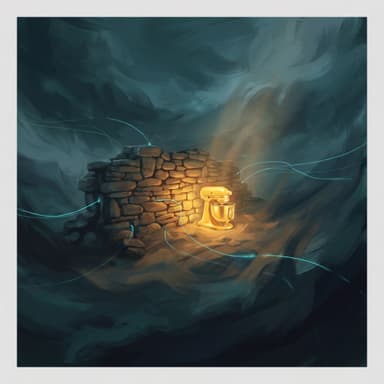
In the episode, we discussed my parents' yellow KitchenAid mixer. It was bought on sale half a century ago because nobody wanted that color. It still spins and works perfectly. Meanwhile, I'm stuck with a phone that's technically intact but has become 'obsolete' due to a software update. This highlights the different perspectives of generations: In his world, things (and people) are made to last, not to be replaced.
This tangible achievement – being able to walk through the streets and point out various places, repairs, and modifications that bear his handiwork – provides a life fulfillment rarely found in the fast-paced world of emails and 'likes.'
Knowing How to Fend for Yourself
His approach to life is likewise pure everyday Stoicism. He didn't teach through long lectures but by example. As an apprentice, you learned primarily with your eyes – by watching him work and handing him the tools at the right time. He was never the boss standing over others giving orders. He was the one who arrived first and led from the front.
He allowed you to make mistakes, even break things and stumble a bit, so that you would learn the most valuable lesson: Knowing how to fend for yourself. But trust was always there. I have never doubted that when he's on the job, he's the best. Not because he carries the title of master, but because he is the embodiment of mastery.
This ability of his is just as vivid today as it was thirty years ago. This December 2025, we renovated the hallway at my house, painted and laid tiles. I took on rolling the ceiling but had barely finished a quarter when my shoulders started protesting. Then he simply took over the roller and finished the rest, quickly and confidently, as if it were the most natural thing in the world. There, his hands speak for themselves.
The Wall We Build
But what stayed with me most after the conversation was a metaphor he used when we discussed how human interaction has changed. How the informal coffee chat is disappearing because you need to book time with people through digital assistants.
"People have built walls around themselves so that you can't just approach them and chat about what's on your heart."
We must recognize the invisible walls we have erected. In our effort to become more efficient and connected through technology, we have ironically built walls that isolate us from sincere, unmediated presence. These reflections were precisely the topic of discussion in the first episode of Season 2 when I spoke with psychologist Pétur Maack.
This conversation was a precious reminder for me. We need to tame technology, yes, but we must not forget the fundamentals. We need to appreciate craftsmanship, focus, and human connection that requires no internet connection.
Dad is my greatest role model in life. In some ways, this was a conversation between master and apprentice – an apprentice who is trying his best to convey the complex challenges that rapid technological changes bring us, by drawing on the wisdom of the master.
Thank you, Dad!
craftsmanshipdeep-workstoicismgenerationsfather-sonvocational-trainingresponsibilitycommunitytechnology
Related Episodes
View all episodes →
Podcast
What do you put into the amplifier?
A conversation with Eyjólfur Guðmundsson — former rector of the University of Akureyri, faculty dean at the Agricultural University of Iceland, and a former economist at CCP (EVE Online). AI as an amplifier, the LLM as Minecraft, the bucket each generation must fill, the benevolent cage and data sovereignty — and why it is about governance, not technology.
5 months ago

Podcast
It's not a box, it's a bucket
What does a publisher actually do once the business becomes the data, not the book? Magnús talks with Pietro Segreto, a PhD student in Rome studying AI and publishing, about the glass box from 1423, AI as a backward-looking shadow, and the story that named the episode: it isn't a closed box, it's a bucket each generation fills for the next.
5 months ago

Podcast
AI won't learn the golf swing for you
Guðmundur Smári Gunnarsson and I start with golf and end in a larger conversation about the body, rhythm and AI as a training partner. Skill is built in the body.
5 months ago